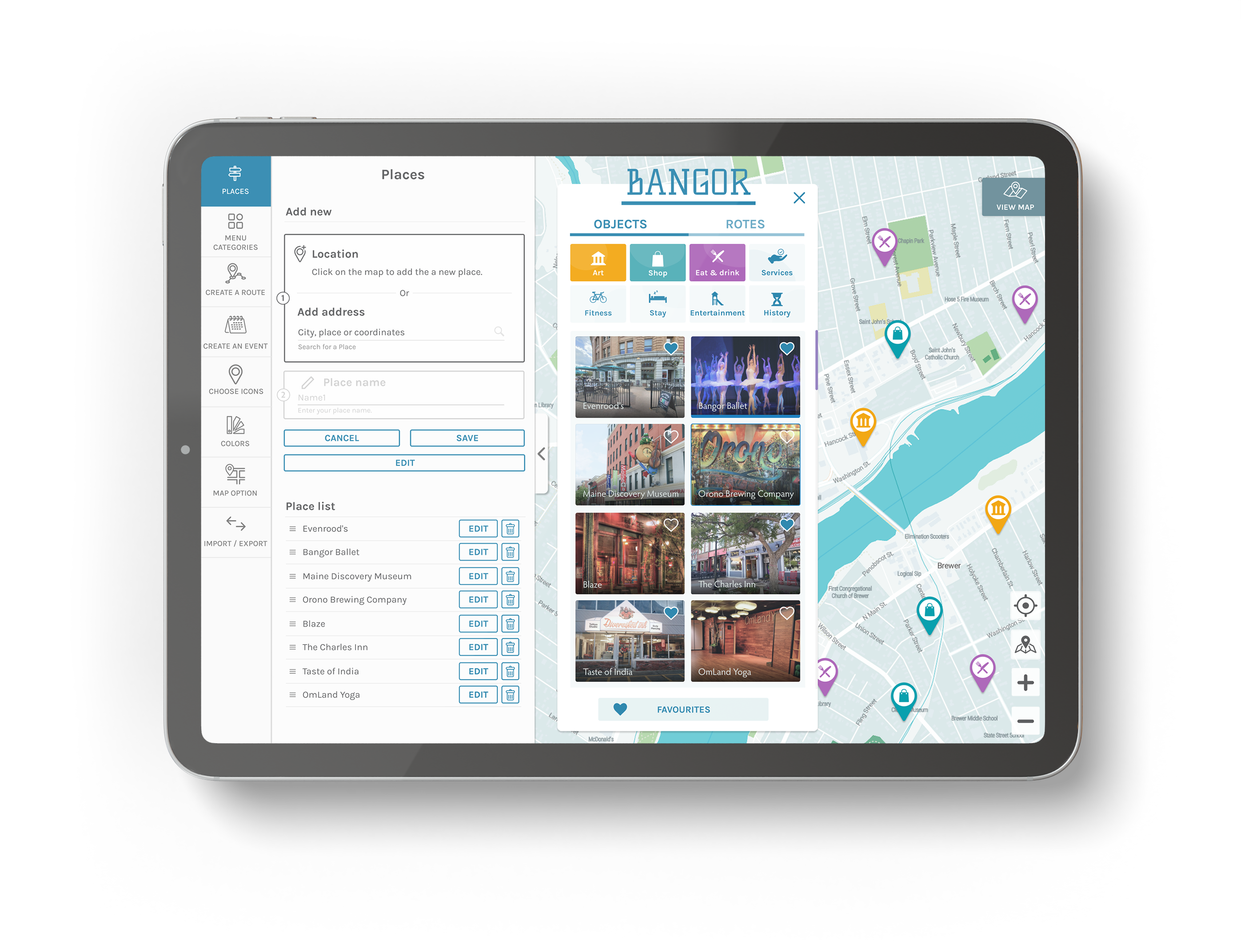
Easy and fast interactive map creator.


Easily create objects, add photos and a description.

Add your objects to categories, which will allow browsing through an inbuilt menu system on your map.

Sharing your map is as simple as embedding it into your website.
ASME PTC 19.11 dictates a strict sequence for sample conditioning: Isolation Valves
(Disclaimer: This post is for informational purposes. Always purchase the latest standard from ASME for contractual compliance.)
is part of the American Society of Mechanical Engineers (ASME) Performance Test Codes (PTC) series, specifically titled "Steam and Water Sampling, Conditioning, and Analysis in the Power Cycle" . It is categorized as an Instrument and Apparatus supplement, providing specialized guidance for the accurate measurement of cycle chemistry. Purpose and Objective
PTC 19.11 - Steam and Water Sampling, Conditioning ... - ASME Asme Ptc 19.11 Pdf
When you locate the official , you will find several critical chapters. Here is what each section typically covers:
An effective Steam and Water Analysis System (SWAS) must strictly adhere to the guidelines outlined in ASME PTC 19.11. The standard breaks down the sampling process into several distinct phases. 1. Isokinetic Sampling
ASME PTC 19.11 is a Performance Test Code published by the American Society of Mechanical Engineers (ASME). It provides authorized procedures, specifications, and instrumentation guidelines for sampling steam and water within the power cycle. ASME PTC 19
Its primary goal is to ensure that measurements for parameters like are accurate enough for performance testing and long-term asset protection. Core Components of the Standard
Once extracted, the sample must travel to the testing station without altering its chemical composition.
: A significant previous version that introduced modernized sampling flow formats. Purpose and Objective PTC 19
Process steam can exceed 1,000°F (538°C) and 3,000 psi (206 bar). Online analyzers require samples at roughly 77°F (25°C) and under 50 psi (3.4 bar). Conditioning happens in two stages:
Low pH causes rapid acid corrosion; high pH degrades copper components. Measures total dissolved solids (TDS)
Excess fluid is pulled in, but heavier particles cannot change direction quickly enough, resulting in artificially high solids concentration. Sample Probes and Nozzles
: Measures total dissolved solids (TDS) and overall purity.
Are you sampling ?
Start building your own map